How Jewelry Store Island Showcase Design Influences Customer Dwell Time
26 August, 2026




Low-iron glass is used in museum display cases mainly because it removes the green tint of standard glass and shows exhibits in a more natural, accurate way. It helps improve clarity, color accuracy, and overall viewing quality for sensitive displays like art, jewelry, and historical artifacts.
Low‑iron glass is a specially refined clear glass with much lower iron content than standard float glass. This makes it far more neutral and closer to “invisible,” which is ideal for museum display cases where true color and detail are critical.
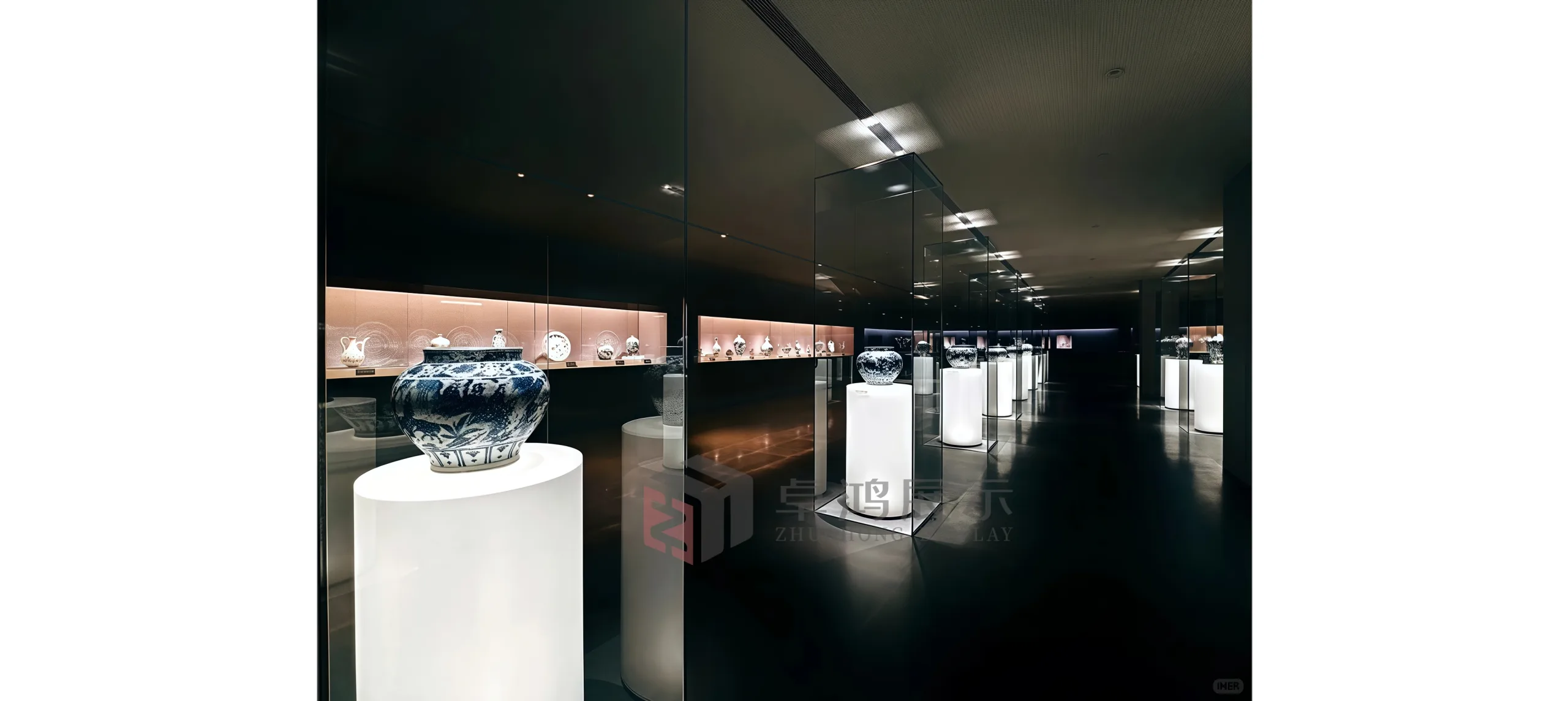
Ordinary glass usually has a slight green or blue tint due to iron impurities, and this can distort the appearance of artworks, textiles, and jewelry. Low‑iron glass removes most of that tint, so the exhibits look brighter, clearer, and closer to their real colors.
| Feature | Low-iron glass | Standard clear glass |
|---|---|---|
| Iron content | Very low | Higher |
| Visible light transmittance | About 91–92% | About 88–89% |
| Color bias | Nearly neutral | Slight green/blue tint |
| Typical use | Museums, art galleries, luxury displays | General windows, basic displays |
in museum display cases, low‑iron glass is often made into:
Tempered low‑iron glass – for strength and safety
Laminated low‑iron glass – for impact resistance and protection
Low‑iron with UV‑filter coatings – to reduce fading and preserve artifacts
This combination gives museums a clear, secure, and long‑term display solution that keeps the focus on the exhibit, not the glass.
Standard float glass contains higher levels of iron oxide, which introduces a distinct greenish tint. This coloration shifts the perceived appearance of light-colored artifacts—such as ivory, white jade, and pale textiles—making them appear unnaturally cool or muted. By minimizing iron impurities, low-iron glass provides a neutral substrate. This near-total color neutrality ensures that the original hues of the artifacts are rendered accurately without color distortion.
With light transmittance typically exceeding 91%, low-iron glass maximizes clarity and minimizes internal light absorption. This increased transparency sharpens contrast and enhances depth perception, which is critical for highly detailed or micro-textured exhibits. For objects requiring close inspection—including gemstones, miniature models, and intricate carvings—the structural details and fine surface textures remain clearly defined from any viewing angle.
The technical advantages of low-iron glass translate directly into improved preservation aesthetics across specific artifact categories:
Textiles: Prevents delicate white, cream, or pastel fabrics from appearing grey, dark, or artificially aged.
Paintings: Preserves the exact color temperature and subtle layer gradients intended by the artist, especially in older oils or watercolors.
Jewelry: Enhances the natural brilliance, refractive properties, and facets of precious stones without introducing external color interference.
In museum and exhibition design, light is always a double-edged sword. While we strive for the purest illumination to reveal every exquisite detail of an artifact, the harmful rays within that very light are silently fading its lifespan. The combination of low-iron (ultra-clear) glass and modern coating technology offers the perfect resolution to this physical paradox.
Light that seems perfectly harmless in our daily lives acts as a corrosive agent to precious manuscripts and artworks. Among all spectrums, Ultraviolet (UV) light is the primary culprit behind artifact degradation and fading.
The Thief of Color and Pigment: High-energy UV rays break down the molecular bonds of pigments and dyes, causing vibrant colors to suffer irreversible fading or discoloration.
The Destroyer of Material Structure:
Paper & Ancient Books: UV exposure accelerates the oxidation of cellulose, causing paper to turn yellow, become brittle, and crumble at a mere touch.
Textiles & Leather: UV radiation breaks down natural protein fibers, causing silk and fabrics to lose elasticity and strength, while leather dries out, cracks, and flakes.
The Museum Paradox: A perfect exhibition demands high light transmittance so visitors can appreciate the finest details; yet, the preservation of the artifact requires strict UV control. This quest for balance has driven revolutionary advancements in glass technology.
Standard float glass carries a distinct greenish tint that distorts color replication and offers very limited UV protection. Low-iron glass, by contrast, boasts an astonishing visible light transmittance of over 91%. When integrated with a high-performance UV-filtering coating, it transforms into a museum-grade protective shield.
The table below highlights the distinct advantages of this composite technology:
| Performance Indicator | Standard Architectural Glass | Museum-Grade Coated Low-Iron Glass | Core Benefit Provided |
|---|---|---|---|
| Visible Light Transmittance (VLT) | ~80% – 85% | ≥ 91% | Eliminates visual barriers; restores 100% of the artifact’s true colors. |
| UV Light Transmittance (UVT) | ~30% – 50% | ≤ 1% | Blocks virtually all harmful UV rays, providing 24/7 protection. |
| Spontaneous Breakage Rate | Moderate | Extremely Low | Minimal iron content drastically reduces risks, enhancing display safety. |
This physical combination of “maximum clarity + minimum UV” elevates the glass from a simple physical barrier to an invisible armor for priceless collections.
For non-renewable, precious artifacts, conservation is a marathon against time. The implementation of low-iron, UV-filtering glass provides a decisive preservation advantage for highly sensitive materials:
High-Value & Irreplaceable Exhibits: Masterpiece paintings, unique manuscripts, and ancient royal garments cannot be restored once damaged. A low-UV environment maximizes their “safe exhibition lifespan.”
Permanent Galleries & Long-Term Displays: Unlike temporary exhibitions that rotate every few months, permanent galleries expose artifacts to light for years or even decades. Low-iron UV glass effectively suppresses the cumulative effects of photochemical reactions, ensuring that exhibits retain their original splendor for generations to change.
By cutting off UV damage right at the source, low-iron coated glass allows our fragile cultural heritage to be showcased safely under the most natural light possible, defying the erosion of time.
A museum showcase is an engineered micro-fortress designed to isolate high-value exhibits from environmental threats. While optical clarity determines how a case looks, its physical structure dictates whether the artifact inside survives. Achieving this long-term protection relies on three structural pillars.
A museum case acts as the primary barrier against theft, vandalism, and accidental impact. These enclosures utilize heavy-duty laminated security glass, consisting of two low-iron glass sheets bonded by a tough polymer interlayer.
Under severe impact, the glass cracks but holds its shape without shattering. This high-security envelope is reinforced by anti-pry structural framing and multi-point locking systems integrated deep within the steel substructure.
Display cases must support heavy structural loads for decades without sagging, warping, or distorting. Even microscopic shifting in the frame can misalign seals, causing air leaks that compromise the internal climate.
To guarantee long-term rigidity, cases are engineered from precision-machined structural steel. These metals are finished with non-outgassing powder coatings to prevent harmful chemical vapors from entering the enclosure over time.
A museum-grade case must maintain an airtight environment to isolate delicate materials from dust, pollutants, and fluctuating room humidity. Achieving this requires precision-engineered gaskets and compressed sealing tracks along all structural joints.
By locking down the internal air volume, conservators can use silica gel or climate control units to maintain a stable relative humidity, preventing the expansion and contraction that destroys organic artifacts.
When designing museum displays, choosing between low-iron glass (ultra-clear) and regular clear glass (standard float) comes down to a balance of visual fidelity, structural performance, and cost. While they look similar at a casual glance, their behavior under professional gallery lighting is vastly different.
The primary differentiator between these two materials is ferric oxide (iron) content. Regular float glass contains significant iron impurities, which introduce a distinct greenish tint. As shown below, this coloration becomes increasingly severe as the glass thickness increases to meet museum safety standards.
By reducing the iron content to roughly 10% of the standard level, low-iron glass eliminates this green cast, yielding a completely neutral, crystal-clear profile that ensures 100% accurate color rendition for textiles, paintings, and manuscripts.
| Feature | Regular Clear Glass | Low-Iron Glass | Museum Impact |
|---|---|---|---|
| Visible Light Transmittance | ~82% – 85% | ≥ 91% | Higher transparency removes the visual barrier between the viewer and the artifact. |
| Color Rendering Index (CRI) | Distorts whites, yellows, and subtle blues due to green tint | Perfect color neutrality | Essential for viewing authentic historical pigments and delicate artwork. |
| Thermal Risk (Spontaneous Breakage) | Moderate risk under high-intensity exhibition lighting | Extremely low risk | Lower iron absorption prevents thermal stress pockets, protecting enclosed artifacts. |
While low-iron glass is the undisputed standard for premium, high-fidelity vitrines, regular clear glass still finds specialized utility within museum environments depending on the exact architectural application:
When to use Low-Iron Glass: Essential for all primary artifact display cases, freestanding vitrines, and heavy laminated security barriers where glass thickness exceeds 6mm. It is critical whenever true-to-life color matching is a curatorial priority.
When to use Regular Clear Glass: Often reserved for budget-conscious perimeter barriers, distant balcony balustrades, or exterior facility windows where slight color shifting is non-critical to the visitor’s core viewing experience.
One of the most important aesthetic advantages of low-iron glass is its ability to create an “almost invisible” barrier between the viewer and the exhibit. Because the iron content is minimized, the glass appears extremely clear and neutral, especially under controlled museum lighting.
This gives visitors the feeling that there is no physical separation at all, which greatly enhances immersion and emotional connection with the displayed objects. In modern exhibition design, this effect is often used in:
The result is a cleaner visual field where the focus stays entirely on the artifact, not the enclosure.
Low-iron glass also supports a wide range of architectural and interior design styles. Its neutral optical properties make it easier to integrate into different spatial concepts without disrupting the visual balance of the environment.
It is especially suitable for:
Because the glass does not distort color perception, designers have more freedom to combine lighting, materials, and structural elements without worrying about visual interference from the display case itself.
Another key advantage is its high compatibility with custom fabrication. Low-iron glass can be processed into various forms to meet different curatorial and architectural requirements, including:
These customization options make it possible to adapt display cases to almost any exhibition concept, from traditional museum layouts to highly experimental spatial designs.
Low-iron glass is usually chosen only when normal glass starts to affect how an exhibit looks. In many museum projects, it’s not the first option—but once color accuracy or visual clarity becomes important, it quickly becomes the preferred solution.
Paintings are very sensitive to small color changes. With standard glass, you can sometimes notice a slight green tint under strong lighting, and it quietly changes how the artwork feels.
Low-iron glass removes that tint, so the colors stay closer to the original work. It’s often paired with anti-reflective and UV protection layers to improve both viewing quality and preservation.
Jewelry display is all about light. Even small distortions can affect how bright or valuable a piece appears.
Standard glass can slightly dull or tint the light. Low-iron glass keeps it neutral, which helps diamonds sparkle more naturally and metals keep their true tone. That’s why it’s widely used in high-end retail and museum showcases.
For historical objects, accuracy matters more than enhancement. Any color shift from the glass can affect how people interpret the artifact.
Low-iron glass avoids that problem by staying visually neutral, allowing ceramics, bronze pieces, or manuscripts to be seen in their real condition without interference.
Low-iron glass is used in museum display cases because it removes the green tint of standard glass and shows exhibits in a more natural, accurate way. It improves clarity and color accuracy, especially for art, jewelry, and historical artifacts.
It is also often combined with UV protection and safety structures to support long-term preservation while keeping the display visually clean.
In practice, companies like szzhdisplay provide fully customized display case solutions, integrating low-iron glass into complete museum-grade systems tailored to different project needs.